
Call for door repair(984) 217-8021

Service 01 of 09 · Charlotte, NC

Storefront Door Repair in Charlotte, NC

A storefront door should swing freely, close on its own and latch without a second push. When an aluminum-and-glass entry drags on the threshold, sags at the latch corner or bounces off the frame, the cause is usually the pivots, the closer or the door's alignment in the frame, not the door itself. We repair storefront entries across Charlotte.

Symptom → cause → fix

What's wrong with the door?

Match what you're seeing to the usual cause. We confirm on site before replacing anything.

Storefront Door Repair: common symptoms in Charlotte buildings
SymptomLikely causeTypical fix
Bottom edge scrapes the thresholdWorn bottom pivot, or the leaf has droppedReplace or reset the pivot and re-hang the leaf
Gap at the top is wider on one sideTop pivot or offset arm has worn looseTighten or replace the pivot and square the leaf to the frame
Latch only catches if you lift the handleDoor has sagged below the strikeCorrect the sag, then reposition the strike only if needed
Door swings open in the windCloser is too weak or the hold-open is engagingAdjust or replace the closer, check the hold-open setting
Deadbolt won't throw, or the key turns hard with the door shutThe door has dropped, so the bolt hits the edge of its keeperCorrect the sag first, then check the lock and cylinder. See commercial door lock repair

The basics

How it works and why it fails

A storefront door is a narrow aluminum frame built around a large sheet of glass. The vertical pieces are called stiles and the horizontal pieces are rails. Where they meet, the corners are held together by welds, tie rods or bolted clips. The door hangs on pivots, butt hinges or a continuous hinge, and a closer brings it back shut. Because the frame is light and the glass is heavy, almost all of the door's weight is carried by a few small pieces of hardware at the hinge side.

That weight is why storefront doors fail the way they do. Every swing puts load on the bottom pivot and pulls the top of the door away from the frame. Over time the pivot wears, the screws holding the top pivot loosen, and the latch corner drops. Once the door is out of square, the closer has to push harder, the lock stops lining up, and the bottom rail starts to rub. A small amount of wear quickly becomes a door that fights every customer who uses it.

The other common failure is at the corners. If a door has been slammed, kicked open, or left to swing in the wind against its stop, the corner joints can loosen and the frame starts to rack, meaning it leans out of square. The glass then carries stress it was never meant to carry. A racked door can look fine from a distance but shows up as uneven gaps, a loose-feeling handle stile, and a lock that only works if you push or pull on the door first.

The parts that matter

Storefront Door Repair: components and how they fail
PartWhat it doesHow it fails
Offset pivot setA top and bottom pivot mounted at the hinge edge of the door that carries its weight and lets it swing.The bottom pivot wears from carrying the load, and the door drops. You notice the bottom rail rubbing the threshold or the latch corner sitting lower than the strike.
Intermediate pivotA pivot mounted partway up the hinge stile that keeps a tall or heavy door from bowing between the top and bottom pivots.If it wears or its screws loosen, the hinge stile can flex. You may see the door twist slightly as it opens or hear a click mid-swing.
Continuous geared hingeA full-height aluminum hinge that spreads the door's weight along the whole hinge edge instead of a few points.These are durable but can bind if the door is racked or if fasteners back out. A grinding feel or a door that will not swing smoothly is the usual sign.
Overhead concealed closerA closer hidden in the header above the door that connects to the top of the door with an arm or track.When it weakens or leaks inside the header, the door stops closing fully or slams. Because it is hidden, oil stains on the header or door top may be the only clue.
MS-style deadlock and cylinderA narrow lock body built into the door stile, operated by a key cylinder, that throws a hook-shaped or straight bolt into the frame.The bolt stops lining up with the strike when the door sags. You notice a key that is hard to turn or a bolt that only throws if you push the door in.
Corner jointsThe connections where the stiles meet the top and bottom rails, holding the door frame square around the glass.Loose corners let the door rack out of square. Uneven gaps, a shifting glass stop or a door that will not stay adjusted point to this.

On-site diagnosis

What we check

Pivots and hinges

Top, bottom and intermediate pivots, or butt hinges, checked for wear and loose fasteners.

Frame and threshold

Squareness of the opening, threshold condition and drag marks along the swing.

Closer and latch

Whether the door reaches the strike under its own closing power, every time.

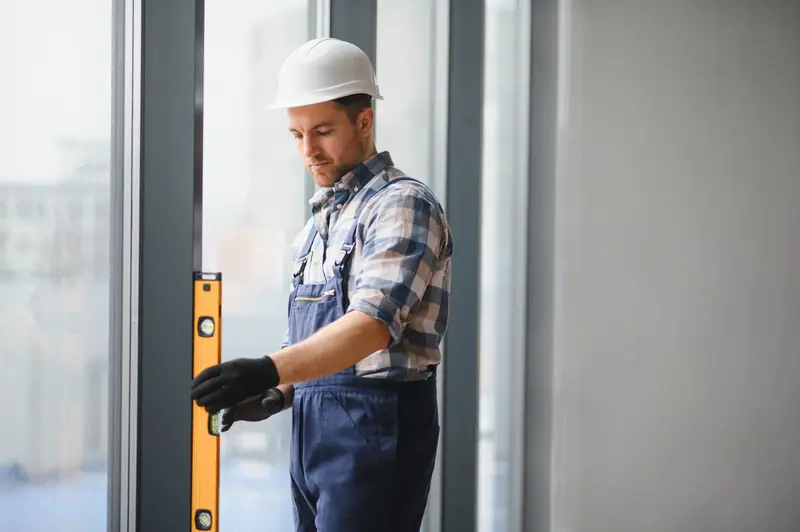
Technician holding a yellow level against an aluminum storefront door frame in Charlotte
Alignment comes first: a level on the frame shows whether the door has dropped or the frame has moved.

Repair or replace?

Pivots, closers and strikes can be replaced on a sound door. A cracked glass lite, a torn corner joint in the door's aluminum frame, or a frame that has pulled away from the building moves the conversation toward replacing the door or the glass.

Storefront Door Repair in Charlotte

Storefront entries in South End, NoDa and along South Boulevard can open hundreds of times a day, and pivots wear faster than any other part. Afternoon sun on a west-facing aluminum frame can also make a marginal door bind for a few hours and then clear. If your door only drags in the afternoon, tell us.

Step by step

How a storefront door repair visit works

  1. We watch the door work first

    Before touching a tool, we open and close the door several times, from both sides, and watch where it rubs, how it latches and how the closer behaves. We also check the gaps around the top, sides and bottom. Uneven gaps tell us which way the door has moved and which part is most likely responsible.

  2. We check the frame, not just the door

    We put a level on the jambs and header and look for signs the storefront frame itself has shifted, such as cracked caulk, loose anchors or a header that has dropped. If the frame has moved, adjusting the door alone will not hold. Knowing this early keeps the repair honest and avoids a repeat visit.

  3. We take the weight off the hardware

    To replace pivots or hinges, the door has to be supported and, in many cases, lifted off. We block and secure the leaf so the glass is protected and the frame is not strained. On a pair of doors, we work on one leaf at a time so the entrance stays partly usable where possible.

  4. We replace or reset the worn parts

    Worn pivots, loose hinge screws, a failing closer or a misaligned lock strike are replaced or reset to match the existing door prep. Where the original fasteners have stripped the aluminum, we use the correct reinforcement method rather than oversized screws that will loosen again. Parts are matched to the door's hanging type and weight.

  5. We re-hang, adjust and test

    Once the door is back on its hardware, we square it to the frame, set the closer speed and check that the lock and latch engage without lifting or pushing. We cycle the door many times from both directions and confirm it closes on its own from full open. Then we walk you through what we changed.

Safe checks

What you can check before you call

A few minutes of observation makes the phone call faster and the diagnosis more accurate.

Do Safe

  • Look at the gap along the top of the door. If it is wider at the latch side than the hinge side, the door has likely dropped.
  • Check the threshold and the bottom of the door for fresh scrape marks or shiny metal. This tells us where the door is rubbing.
  • Note whether the problem changes with time of day or weather. A door that binds only in afternoon sun or high wind gives us useful information.
  • Take a photo of any label or brand name on the closer, the lock face or the top of the door. It helps us bring matching parts.

Don't Avoid

  • Don't remove pivot or hinge screws to see what's wrong. The door can shift or drop suddenly, and a falling glass door is dangerous.
  • Don't shim the threshold or file the bottom rail to stop rubbing. It hides the real cause, and the door will keep dropping.
  • Don't keep forcing the lock when it only works by pushing on the door. That strains the bolt and cylinder and can break the lock body.

Expert answers

Storefront Door Repair: the decisions that matter

Floor closer or overhead concealed closer on a storefront

Storefront doors usually use one of two hidden closers. A floor closer sits in a metal box set into the floor under the hinge side of the door, and the door rides on a spindle at the bottom. An overhead concealed closer sits inside the header above the door and connects with an arm or a track. Both keep the closer out of sight, which is why they are popular on glass entries. The main difference is where they wear and how they fail. Floor closers sit in the path of water, grit and cleaning chemicals, so the box can rust and the closer can lose fluid or seize. Repair often means working with the door off and the floor box open. Overhead concealed closers stay cleaner and drier but are harder to inspect, so problems tend to show up only as a door that slams or stops short. When a floor closer has failed, replacing it with the same footprint is usually simplest. Converting from one type to another is possible but involves changes to the door, the frame or the floor, so it is a decision worth making with the full picture in front of you.

Repair the door, replace the door, or replace the glass

Most storefront problems are hardware problems, and fixing the hardware is the right answer. The door itself is a sturdy frame, and pivots, closers, locks and strikes are all designed to be replaced. Things change when the frame of the door is damaged. If the corner joints are cracked or have pulled apart, the door will keep racking no matter how many times it is adjusted. A bent stile from an impact can also stop the door from ever sitting square. In those cases replacing the door leaf while keeping the existing storefront frame is often the practical option. Broken or cracked glass is a separate issue. A sound door with a damaged lite can usually be reglazed, but the replacement glass has to meet the safety glazing requirements that apply to doors, which generally means tempered or laminated glass. Doors in busy entries, like those along South Boulevard or in Uptown lobbies, take more abuse, so it is worth asking whether a heavier stile or a continuous hinge makes sense if the door has failed more than once.

Make it last

How to prevent the next failure

Don't let the door swing free

If the closer is weak or the wind catches the door, it can fly open against its limit. That shock loosens pivots and corner joints. Get a weak closer looked at early and consider an overhead stop if the door regularly blows open.

Keep the threshold clear

Grit, salt and small stones on the threshold get dragged under the bottom rail and wear both surfaces. Sweeping the entry and keeping mats from catching the door edge reduces wear on the bottom of the door and the sweep.

Don't prop with wedges

Kick-down stops and wedges under the bottom rail hold the door at an angle that strains the pivots and the closer arm. If you need the door open, ask about a closer with a proper hold-open function instead.

Tighten early, not late

A pivot or hinge screw that is starting to back out is easy to tighten. Once it has worked loose for weeks, it can strip the aluminum. A quick look at the hinge side every few months catches this before it becomes a bigger repair.

What affects the cost of storefront door repair

We don't quote flat prices without seeing the door. These factors set the scope.

How the door is hung
Offset pivots, center-hung pivots, butt hinges and continuous hinges each require different parts and different amounts of labor. A door on a floor closer with center-hung pivots involves more work than swapping a worn offset pivot. Knowing the hanging type before the visit helps us scope the job.
Closer type and location
A surface-mounted closer is quick to access. An overhead concealed closer sits inside the header, and a floor closer sits in a box set into the concrete. Hidden closers take more time to reach and adjust, and some older models need a matching replacement to fit the existing cutout.
Condition of the frame and corners
If the storefront frame has shifted or the door corners have loosened, the job grows beyond hardware. Re-squaring a door, tightening corner joints or re-anchoring a frame adds time and may lead to a recommendation to replace the door instead of repairing it.
Single door or pair
A pair of doors has two sets of hanging hardware, often two closers, and a meeting edge that has to line up. Adjusting one leaf can affect how the other latches. Pairs take longer to set up correctly than a single door.
Parts availability
Many storefront doors use common hardware patterns, but older or less common doors may need parts that are harder to source. When an exact match is not available, an adapter or a different model may be needed, which can affect both time and scope.

Before you call

Have this ready

These details let us scope the job on the phone and send the right parts.

Call (984) 217-8021
  1. Single door or a pair
  2. Where it scrapes or catches
  3. Whether the closer is overhead, concealed in the frame, or in the floor
  4. Any brand name on the door rail or closer
  5. Who can approve the work: owner, tenant or property manager

FAQ

Storefront Door Repair questions

Does a dragging storefront door need to be replaced?

Usually not. Most dragging is caused by worn pivots or a dropped leaf, and both can be repaired. Replacement only comes up when the door's frame joints, the glass or the storefront frame itself is damaged.

Why does my glass door only stick sometimes?

Temperature, wind and partial wear all play a part. Aluminum expands in direct sun and a worn pivot lets the leaf move. Tell us when it happens so we can check it under those conditions.

Can you repair a floor-mounted closer on a storefront door?

Yes, we diagnose and service floor closers. Whether it can be rebuilt or has to be replaced depends on its condition and whether parts are still available. We'll explain the options before any work starts.

What does it mean when my storefront door rubs only at the top corner?

Rubbing at the top latch-side corner usually means the top of the door has moved toward the latch jamb. That can come from a worn top pivot, loose screws at the hinge side, or the door frame starting to rack. It is rarely the frame of the building. We check the gaps and the pivots to find which part has moved before adjusting anything.

Can a storefront door be made ADA compliant without replacing it?

Often, yes. Many access problems come from the closer and hardware, not the door itself. Closers can be adjusted or replaced to meet the ADA closing speed, and handles can be changed to hardware that works without tight grasping or twisting. Threshold height and clear width are fixed by the opening, so those need a separate look if they are the issue.

Why does my glass door rattle when the wind blows?

Rattling usually comes from worn pivots, loose weatherstripping, or a lock bolt that no longer fits tightly in its strike. A door that has dropped slightly can also sit loosely against its stops. Tightening the hardware, replacing worn pile weatherstrip and resetting the strike usually stops it. Rattling is an early sign of wear and worth fixing before it gets worse.

Is it safe to keep using a storefront door that is dragging?

A door that drags but still opens, closes and locks is usually safe to use for a short time, but the dragging is causing more wear with every cycle. If the door is hard to push, will not latch, or the glass looks cracked or loose in its frame, stop using it and call. A door that might drop or shatter is not worth the risk in a busy Charlotte entry.

Will my entrance be out of use during the repair?

Plan for the door to be out of use while pivots or a closer are changed, because the door may have to be lifted or held while worn parts come out. If glass or parts have to be ordered, ask on the call what the door will be able to do in the meantime, so you can plan how customers get in.

Related door repairs

Need storefront door repair in Charlotte?

Call and describe what the door is doing. We'll tell you what's likely wrong and get it fixed.

Call (984) 217-8021
Commercial door repair · CharlotteTap to call (984) 217-8021