
Call for door repair(984) 217-8021

Service 05 of 09 · Charlotte, NC

Steel Door & Frame Repair in Charlotte, NC

Hollow metal doors take the hardest use in a building: deliveries, carts, wind and weather. When a steel door rubs the frame, the hinge screws stop holding, or the frame rusts at the base, each symptom points to a different repair. We repair hollow metal doors and frames on Charlotte commercial and industrial buildings.

Symptom → cause → fix

What's wrong with the door?

Match what you're seeing to the usual cause. We confirm on site before replacing anything.

Steel (Hollow Metal) Door & Frame Repair: common symptoms in Charlotte buildings
SymptomLikely causeTypical fix
Door rubs the frame on the latch sideHinges worn or the leaf saggingReplace hinges, re-shim and re-hang
Hinge screws spin and won't holdHinge reinforcement stripped or tornRepair the reinforcement; replace the door if it can't be repaired
Frame rusted at the baseStanding water or salt at the jambCut out and repair the rusted section or replace the frame
Dented or bowed around the lockImpact or prying damageAssess the edge and lock prep; repair or replace the leaf

The basics

How it works and why it fails

A hollow metal door is a steel skin wrapped around an internal core, usually honeycomb, polystyrene or steel stiffeners, with heavier steel reinforcement welded inside where the hinges, lock and closer attach. The frame is formed steel too, with a head across the top, two jambs and a stop that the door closes against. Anchors tie the frame to the wall, whether that wall is masonry, steel stud or concrete. The door is only as strong as those hidden reinforcements and anchors, which is why a door can look fine and still fail.

Most failures start at the hinges. A heavy steel door hangs entirely from its hinges, and the top hinge carries the most load. As the pins and knuckles wear, the door drops toward the latch side and starts to rub. Keep using it and the screws work loose, then strip the reinforcement plate behind them. Doors that get propped open, hit by carts or caught by wind take that damage faster. A door on an exposed wall can wrench its own hinges in a single strong gust.

Rust is the other main enemy. Steel frames sit on the floor at the base of each jamb, right where rainwater, mop water and de-icing salt collect. Paint protects the steel until it chips, and then corrosion works upward from the bottom, often hidden behind caulk until the metal is thin. On exterior doors in Charlotte, summer storms and long humid stretches keep the base of the frame damp. Missing door sweeps, worn thresholds and a slab that drains toward the door all make it worse.

The parts that matter

Steel (Hollow Metal) Door & Frame Repair: components and how they fail
PartWhat it doesHow it fails
Hinge reinforcementA thick steel plate welded inside the door and frame that the hinge screws thread into.When it strips or tears loose, the hinge screws spin without tightening and the door sags. It is hidden inside the steel, so loose screws are usually the first sign.
Jamb anchorsClips, straps or bolts that fasten the frame jambs to the surrounding wall.Failed anchors let the frame shift each time the door closes. You may see the jamb move, cracked drywall or mortar beside the frame, or a latch that starts missing the strike.
Frame head, jamb and stopThe top piece, the two side pieces and the raised lip that together form the steel frame and give the door something to close against.Impact bends the stop and jambs, so the door binds or the gap turns uneven. Rust almost always starts at the bottom of the jambs.
Continuous hingeA full-height hinge that spreads the door's weight along the whole edge rather than on three or four points.It is a common upgrade for heavy doors that keep sagging. When one wears, you may hear grinding along its length or see the door drop slightly at the latch side.
Lock edge and lock reinforcementThe formed steel edge of the door and the internal plate that the lock or exit device mounts to.Prying and impact can split the edge or bend the lock prep, so the lock sits crooked or will not secure. Damage here usually matters more than dents elsewhere on the face.
ThresholdThe metal sill at the base of the opening that bridges the floor and seals against the bottom of the door, often paired with a door sweep.Thresholds work loose, crack or wear down, letting water and drafts in at the frame base. That moisture speeds up rust at the bottom of the jambs.

On-site diagnosis

What we check

Leaf and frame

Bowing, rust and damage to how the frame is anchored to the wall.

Hinge reinforcement

Whether there's still solid steel behind the hinge screws.

Labels and hardware

Fire labels and existing hardware that limit what changes can be made.

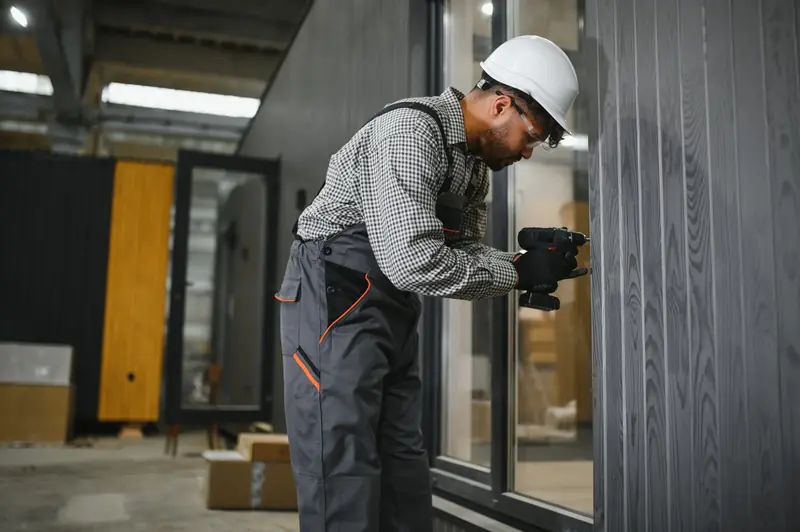
Technician with a cordless drill repairing a commercial steel door frame in a Charlotte warehouse
Hinge reinforcement and frame anchors decide whether a sagging steel door can be repaired in place.

Repair or replace?

Hinges, sweeps and hardware are routine repairs. Torn reinforcement, rust that has eaten through the frame, or a door that has bowed out of shape may make replacement the cheaper option over time. If the door or frame has a fire label, repairs have to keep the rated assembly intact.

Steel (Hollow Metal) Door & Frame Repair in Charlotte

Warehouse and distribution buildings along Westinghouse Boulevard, in Steele Creek and near the airport depend on steel man doors beside the docks. Carts, pallet jacks and summer storms are hard on them. A door that won't latch on a loading area is a security gap, so treat it as one.

Step by step

How a steel door & frame repair visit works

  1. Look at the whole opening

    We check the door, frame, hinges and hardware together before deciding anything. A door that rubs might have worn hinges, a bent frame or a wall that has moved. We look at the gaps around the door, whether the frame is plumb and square, and whether the door latches without being pushed.

  2. Read the labels and hardware

    We look for fire labels on the door edge and frame, and we note the existing hinges, lock, exit device and closer. A labeled assembly limits what can be done in the field, and the existing hardware preps decide whether a replacement door or part will fit without new cutting.

  3. Test the reinforcement and anchors

    With the door supported, we check whether the hinge screws bite into solid steel and whether the frame is still fastened to the wall. If the jamb moves when the door closes, the anchors have let go. This step decides whether the door can simply be re-hung or needs more work.

  4. Make the repair

    Typical repairs include new hinges, re-shimming the hinge side, repairing stripped screw holes, adjusting the strike, straightening minor frame damage, and treating or repairing rust at the frame base. Where a continuous hinge is the better long-term fix for a heavy, high-use door, we explain that option and its tradeoffs before installing it.

  5. Check operation and sealing

    After the repair, we close the door from several positions to confirm it latches every time, check the clearances along each edge and confirm the closer brings it shut. On exterior doors, we check the sweep and threshold so water and drafts are not getting in underneath.

Safe checks

What you can check before you call

A few minutes of observation makes the phone call faster and the diagnosis more accurate.

Do Safe

  • Open the door partway and lift gently on the latch edge. If the door moves up and down at the hinges, the hinges or their screws are worn.
  • Check whether the hinge screws are tight. A screw that turns without tightening means the reinforcement behind it may be stripped.
  • Look at the bottom of each jamb for bubbling paint, flaking rust or soft spots, and take photos so the extent is clear before the visit.
  • Look on the hinge edge of the door and the frame jamb for a fire label, a metal plate or embossed stamp. Note whether one is there, since it affects which repairs are allowed.

Don't Avoid

  • Don't grind off or paint over a fire label. NFPA 80 requires labels to stay legible, and an unreadable label can mean the assembly fails its annual inspection.
  • Don't keep using a door with stripped hinge screws. The load shifts onto the remaining hinges and can tear out their reinforcement too.
  • Don't drill, cut or weld on a fire-rated door or frame to add hardware. Field changes beyond what the listing allows can void the rating.

Expert answers

Steel (Hollow Metal) Door & Frame Repair: the decisions that matter

Repairing vs replacing a rusted steel frame

Rust at the base of a steel frame is common on exterior doors and on interior doors that see mopping or washdowns. The right fix depends on how far it has gone. Light surface rust, where the steel is still solid when tapped, can be cleaned, primed with a rust-inhibiting primer and repainted. Once the steel is thin, flaking in layers or has holes, the damaged section has to be dealt with. On many frames the bottom of each jamb can be cut out and a new section fitted in, which keeps the rest of the frame and avoids disturbing the wall. That works when the rust is limited to the base and the anchors above are sound. Full replacement makes more sense when rust has spread up the jambs, the anchors have corroded, the frame is also bent, or the frame carries a fire label that a field repair would compromise. Removing a frame set in masonry means cutting it out and patching the wall, so it is a larger job. Whichever route you take, fix the cause too. If water still pools at the jamb, new steel will rust the same way.

When does a continuous hinge make sense?

Standard butt hinges carry a steel door on three or four points. On a heavy door that opens all day, the top hinge takes the most strain, and that is where wear and stripped reinforcement usually begin. A continuous hinge runs the full height of the door and spreads the weight along the whole edge. That reduces the leverage on any single point, so the door is much less likely to sag, and it can rescue a door whose hinge reinforcement is too damaged to hold screws. Continuous hinges come in geared aluminum and pin-and-barrel steel or stainless styles, fastened through the door edge and frame with many screws. They suit back doors near loading areas, school and medical building doors, and any door that has needed new hinges more than once. They are not always the right choice. On a fire-rated door, the hinge must be listed for use on that rated assembly. On a door with electrified hardware, a model that carries wiring through the hinge may be needed. We check the frame first, because a continuous hinge cannot fix a frame that is loose in the wall.

Make it last

How to prevent the next failure

Stop the door from swinging into the wall

Wind and hard pushes can throw a steel door past its normal swing and wrench the hinges. A wall stop, overhead stop or holder limits the swing. On exposed exterior doors, a closer with the backcheck set correctly slows the door before it reaches the end of its travel.

Keep the base dry

Make sure the threshold is sealed, the sweep is intact and water drains away from the door instead of pooling against the frame. Keep the joint at the bottom of each jamb sealed and touch up chipped paint before rust gets started.

Protect the high-impact zones

Kick plates, edge guards and bumper rails near loading areas take the hits that would otherwise dent the door or bend the frame. They are far easier to replace than a damaged door leaf or a bent jamb.

Tighten hardware during routine maintenance

Hinge screws, closer arms and lock trim loosen with use. Tightening them during scheduled maintenance, before they strip, keeps a small adjustment from becoming a reinforcement repair. Fire-rated doors also need their annual NFPA 80 inspection.

What affects the cost of steel door & frame repair

We don't quote flat prices without seeing the door. These factors set the scope.

Fire rating
A labeled door or frame has to be repaired with listed parts and approved methods. That rules out some field fixes, and when damage is severe, replacement with a labeled assembly may be the only acceptable option. It also means documenting the work for the next inspection.
Extent of rust
Surface rust can be cleaned and treated. Rust that has thinned or perforated the steel at the jamb base means the damaged section must be repaired or the frame replaced. The deeper the corrosion runs, the bigger the job, and hidden rust is often worse than it first looks.
Reinforcement and anchor condition
A door that only needs new hinges is a straightforward repair. Stripped or torn reinforcement inside the door, or anchors that have pulled out of the wall, take more time and more parts, and sometimes involve work on the wall around the frame.
Wall type
Frames set in masonry, steel stud and concrete walls are anchored in different ways. Re-anchoring or replacing a frame in masonry or concrete involves more cutting and patching than in a stud wall, which changes the scope of any frame work.
Hardware on the door
Exit devices, closers, electrified hardware and the existing lock all have to be removed and reinstalled, or replaced, during a door or frame repair. A replacement door must also be prepped to match the hinge locations and hardware already on the frame.

Before you call

Have this ready

These details let us scope the job on the phone and send the right parts.

Call (984) 217-8021
  1. Where the door rubs or what's damaged
  2. Whether there's a fire label on the door edge or frame
  3. Interior or exterior opening
  4. Whether it still closes and locks today

FAQ

Steel (Hollow Metal) Door & Frame Repair questions

When is replacing the frame better than repairing it?

When rust has gone through the steel, the anchors have failed, or the frame is badly bent. We assess the frame and the door separately and explain each.

Can a dented steel door be repaired?

Cosmetic dents can often stay. Damage at the lock edge or hinges, or a door that has bowed out of shape, affects function and usually needs repair or replacement.

Do you repair fire-rated steel doors?

Yes. Work on rated assemblies uses parts and methods that keep the rating. See our fire door repair page for details.

Why does my steel door stick only in summer?

Heat expands steel, and humidity and ground movement can shift the wall and slab around the frame slightly. If the clearances were already tight because the hinges had worn, that small seasonal movement is enough to make the door rub. The real fix is usually restoring the hinge side and the gaps, not grinding down the door edge.

Can you replace just the door and keep the existing frame?

Often, yes, if the frame is square, solidly anchored and not rusted through. The new door has to match the frame's opening size, hinge locations and lock position. If the opening is fire rated, the door must carry a label for that rating. We measure and check the frame before recommending a door-only replacement.

What does the gauge of a steel door mean?

Gauge describes the thickness of the steel skin, and a lower gauge number means thicker steel. Heavier gauges resist dents and prying better and suit exterior and high-abuse openings, while lighter gauges are common on interior doors. If a door keeps getting damaged by carts or forced entry, a heavier gauge replacement is worth considering.

Is it safe to leave a steel exterior door that won't latch until the repair?

It should not be left unsecured. A door that won't latch is a security gap, and on a fire-rated or exit door it is a safety problem as well. Keep exit paths usable, never chain or block an exit door, and arrange the repair. What can be done in the meantime depends on the door's role, so describe it when you call.

Related door repairs

Need steel (hollow metal) door & frame repair in Charlotte?

Call and describe what the door is doing. We'll tell you what's likely wrong and get it fixed.

Call (984) 217-8021
Commercial door repair · CharlotteTap to call (984) 217-8021